BTM InterAzioni – Poggiardo: the Via Francigena of the South charts new paths for more inclusive tourism

Redazione BTM
- 21/09/2026
The Via Francigena of the South as a laboratory for more inclusive, conscious, and contemporary tourism: this is the guiding thread of BTM InterAzioni – Poggiardo, the itinerant format signed by BTM Italia that will take place from September 23 to 25 in the heart of Salento.
The goal is to present to 20 national and international buyers, operators, and industry press an integrated tourism offer, capable of telling an authentic and contemporary Salento along the route of the Via Francigena of the South, intertwining heritage, landscape, culture, food and wine, and new ways of experiencing places. A two-day fam trip is scheduled, designed to introduce an international audience to the excellences of the territory through an experiential itinerary with stops dedicated to the Francigeno heritage, among villages, archaeological sites, places of worship, and rural landscapes. An opportunity to connect the local supply chain with foreign markets and explore the new challenges of slow tourism, from accessibility to innovation, up to the various forms of inclusion. Completing the program will be the B2B on September 25, in the halls of the Palazzo della Cultura in Poggiardo, where buyers will meet directly with local sellers, learn about their offers, and create the premises for new commercial collaborations.
The event, which enjoys the patronage of the Province of Lecce, is part of the broader project “For an Accessible Via Francigena of the South for All,” promoted by the leading municipality of Poggiardo in collaboration with the European Association of the Via Francigena (AEVF) and the Association Mollare Mai, thanks to actions funded by the Ministry of Tourism to transform about 120 kilometers of the Salento route into a model of inclusive, slow, and sustainable tourism.
The activities involve five stops between Lecce and Santa Maria di Leuca, with specific interventions in the territories of Poggiardo, Cannole, Giuggianello, Giurdignano, Martano, Palmariggi and Tricase and impacts also on other centers crossed.
The proposed model is innovative and aims to make the Salento Francigeno route a pioneer in Italy in terms of accessibility, driven by a vision that goes beyond the removal of barriers for people with mobility difficulties. Attention is also focused on sensory and cognitive disabilities, the needs of the elderly, and those with particular needs or who are temporarily in conditions of reduced mobility.
Through the adoption of the AEVF Vademecum on the accessible Via Francigena and continuing in the vein of the initiatives “Via Francigena For All” and “HIKE4ALL,” the plan includes mapping critical points, georeferencing the route, services, and points of interest, extraordinary maintenance interventions, rest areas equipped with first aid kits, smart benches powered by solar panels, and tactile QR codes. Among the planned actions is also the translation into LIS, the Italian Sign Language, of the contents and useful information for the enjoyment of the route. Furthermore, immersive technologies, with the development of augmented and virtual reality tools for a highly inclusive enjoyment of the heritage. The Salento intervention is also linked to the candidacy process of the Italian Via Francigena for UNESCO World Heritage status, the outcome of which will be communicated next month.
The enhancement of accessibility represents, in this context, one of the elements of the national strategy dedicated to the Via Francigena, considered a route capable of connecting Italy to the European network of great paths.
As part of BTM InterAzioni – Poggiardo, the action will materialize not only with the fam trip and B2B sessions but also through a moment of discussion and training with schools, on the morning of September 25. Title of the day: “Francigena Salento on the move: a territorial opportunity for the tourism of the future.” Looking to the future also means involving those who will be called to work in tomorrow's tourism, and this will be an opportunity to reflect on the potential of the itinerary and the skills necessary to transform them into new opportunities.
In the afternoon, the program will come alive with the National Conference “Francigena Salento on the move: tourism, inclusion, and innovation for territorial enhancement,” with LIS interpreter, dedicated to the development prospects of the Via Francigena of the South and its role in building an increasingly inclusive and innovative tourism offer. The discussion will start from the project “For an Accessible Via Francigena of the South for All,” with an in-depth look at new models of inclusion and the ways to make the route and the territories crossed more easily accessible. Following this, two workshops to explore strategies and communication tools capable of telling and promoting the Via Francigena, and to discuss the opportunities offered by digital, with a look at the role of the Google ecosystem in strengthening the visibility of destinations and local realities. Closing the work will be the institutional panel “Where the path becomes Destination,” which will bring the discussion to the level of territorial strategies and development policies. At the center, the transition from a route to be traveled to a destination to be built and promoted, through a shared vision that can network municipalities, operators, services, and local communities. An approach that looks at the Via Francigena not only as a path but as an opportunity to generate new tourism, economic, and territorial opportunities. Finally, to complete the narrative of the territory through its flavors and productions, the evening will conclude with a tasting dedicated to the typical products and identity flavors of Salento, curated by BTM Gusto.
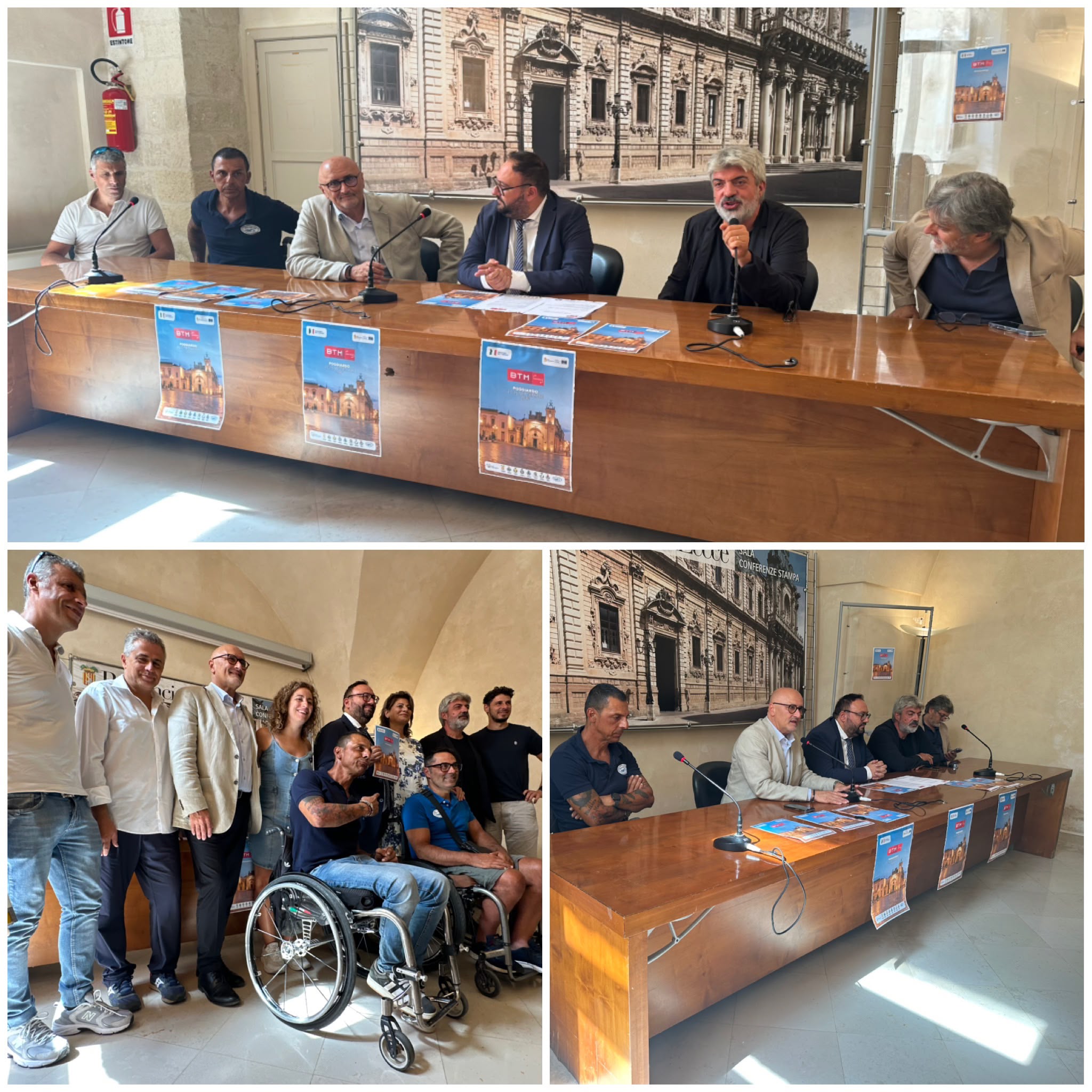
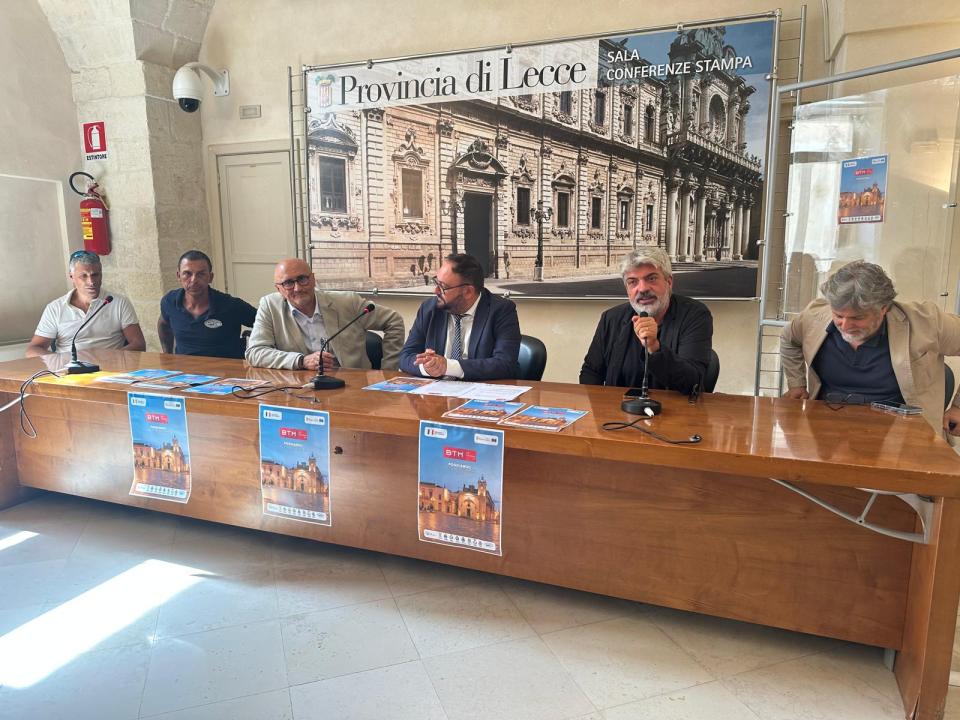
Today, at Palazzo Adorno, the official presentation of the event in the presence, among others, of the President of the Province of Lecce, Fabio Tarantino, the Mayor of Poggiardo, Antonio Ciriolo, the president of the Association Mollare Mai, Adriano Bolgnese, and the CEO & Founder of BTM Italia, Nevio D’Arpa.
Fabio Tarantino (President of the Province of Lecce): «With the project of the Via Francigena, we are called to lead a new model of tourism, rooted in our history and in traditional paths. An approach that connects us with a different traveler and with an audience driven by the desire to discover unique and valuable places. Our challenge is to intercept this audience and guide them to discover the cultural and deeper soul of Salento».
Antonio Ciriolo (Mayor of Poggiardo): «The strength of this project lies in its dual value: promoting an entire territory through the seven municipalities involved — Poggiardo, Tricase, Martano, Giurdignano, Cannole, Palmariggi, and Giuggianello — and making the route fully accessible. It is an extraordinary intervention considering that, along the entire itinerary of the Via Francigena from Canterbury to Jerusalem, this of Salento is absolutely the second stretch made accessible to all after the first experience in Piedmont. We do not consider this route a finishing point, but a replicable model. Inserting Salento into the major circuits of international paths means destagionalizing flows, generating widespread economy for the small municipalities of the inland, and safeguarding our material and immaterial heritage for future generations».
Adriano Bolognese (Association Mollare Mai): «The enjoyment of the territory starts first of all from correct and transparent information. The goal is to make the lesser-known riches of Salento accessible to people with disabilities, often closed off due to architectural barriers. Through the use of technology, such as the implementation of QR codes and digital tools, the project aims to eliminate these distances. Everything stems from a direct experience in the field during a four-day hike along the route. Due to some critical points, the team studied alternative paths thus ensuring the continuity of the journey for everyone».
Nevio D’Arpa (CEO & Founder BTM Italia): «BTM InterAzioni is a tested format that goes beyond simple meetings precisely because it creates concrete and lasting connections. The choice of Poggiardo as the venue strengthens this vocation and allows us to work on a broader territorial dimension, involving the municipalities crossed by the Via Francigena, connecting heritage, operators, businesses, and communities. It will be an operational laboratory of three days designed to generate real synergies and to transform local potential into an inclusive, sustainable, accessible, and authentic tourism offer».
www.btmitalia.it