
World Pasta Day arrives to celebrate the dish symbolizing sharing

Redazione BTM
- 22/10/2025
The global passion for pasta does not stop despite the uncertain scenario: global production has exceeded 17 million tons, with Italy maintaining leadership with 4.2 million tons produced in 2024.
A record that Italians are aware of, as 96.6% believe that pasta is the ambassador of Made in Italy worldwide. These are some data released on the occasion of World Pasta Day 2025, the event wanted by Unione Italiana Food together with the International Pasta Organisation (Ipo) that every year on October 25 celebrates the dish symbolizing sharing and conviviality, representing a special moment to reflect on the cultural, social, and gastronomic value of one of the most beloved symbols of Italian cuisine.
Established in 1995 during the World Pasta Congress, this day was designed to promote knowledge of the varieties of pasta from around the world and to highlight its nutritional and social qualities.
But pasta is not just a dish to enjoy: it is a thread that weaves through territories, local identities, and stories. It is precisely from this intertwining of flavors and places that the tourism potential related to the world of pasta is born.
When traveling in Italy, for example, pasta can become not just a lunch or dinner, but an immersive experience in the name of the much-appreciated “experience” that is very dear to foreign travelers. Various Italian realities, in fact, open their doors to visitors who want to see up close how this iconic product is born, from the moment of mixing, to the dies, to the drying phases. In some companies, it is also possible to participate in mini-guided tours, showcasing the complete production cycle.
Another target is the Pasta Museum located in the Province of Parma, which tells the story of one of the most beloved symbols of Italy. A must-visit for those who want to understand how a simple mixture of wheat and water can encompass centuries of culture, work, and tradition.
The exhibition path takes visitors on a true journey from field to table: starting from the grain, passing through the mills and grinding techniques, until reaching the home workshops where the “sfogline” shaped tagliatelle and tortelli with tools that today seem like works of art.
The subsequent rooms tell the story of the pasta industry, with 19th-century machinery, original dies, and models of historic pasta factories that testify to the creativity and precision typically found in Emilia.
Far from being a collection of objects, the museum represents a sensory and cultural narrative. Among vintage advertisements, illustrations, stamps, and works of art dedicated to pasta, one discovers how deeply this food is rooted in everyday life and in the collective imagination of the country.
And a place like this, besides being an original attraction, offers a context to understand how pasta is an integral part of the cultural and agro-industrial development of the territory.
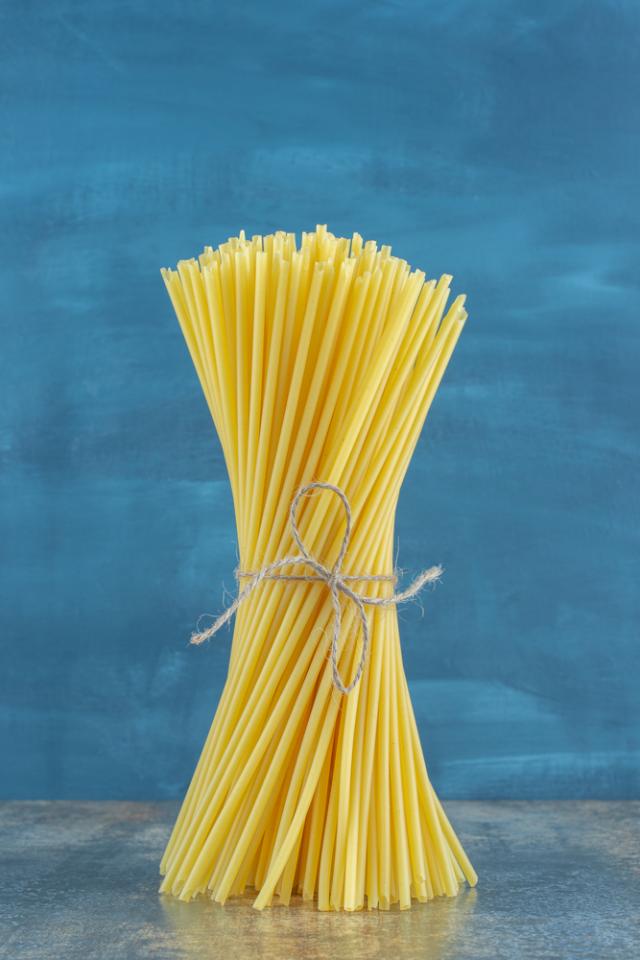
Spaghetti, bucatini, rigatoni, penne, farfalle, paccheri, fusilli, trofie, and so on: it is estimated that in our country there are hundreds of formats, each linked to a geographical area, a custom, or a practical necessity.
Finally, pasta ranks in the Top 5 elements that make Italians proud to be Italian (45%), alongside monuments (84.9%), art (75.8%), natural landscapes (73.6%), and literature (69.2%), even more than music (39.6%), opera (34.6%), and sports (27.3%).