
The vacation that does good: why choose a camper

Redazione BTM
- 25/08/2026
Do you need to take a break? The answer might be a trip in a camper!
More and more travelers see the road trip as an opportunity to slow down, step away from routine, and face moments of change.
There is a moment during a camper trip when the destination stops being the most important thing. It’s when the road becomes part of the experience: you stop in front of a view, change your itinerary, spend a few extra hours in a small village, or simply decide not to rush.
It’s perhaps also for this reason that the camper is taking on a new meaning for some European travelers. Not just a means of transportation and a way to spend vacations, but a mobile space in which to slow down, change perspective, and temporarily distance oneself from the rhythms of everyday life. This evolution is described in a study conducted by Goboony and Yescapa, European platforms specializing in camper and van rentals, titled "Campervan Survey 2026" involving 2,158 travelers and camper owners across seven European countries.
The most significant finding is that 83% of respondents would consider a camper trip to face an important moment in their lives. Among the situations most frequently mentioned are retirement, cited by 54% of the sample, and burnout, indicated by 50%. But the trip is also associated with other delicate transitions: 33% would consider a road trip after a separation or divorce, 26% after the loss of a loved one, and about 19% to cope with the so-called "empty nest" phase.
These numbers do not, of course, demonstrate that a trip can "cure" stress or resolve a personal situation. However, they tell something interesting about travelers' expectations: vacations are increasingly perceived as a space to regain time, autonomy, and distance from routine.
The strength of the road trip lies precisely in the possibility of not having to follow a rigid schedule. Unlike a vacation built around a single destination, the road trip allows for modifying the route, stopping, extending a stop, or choosing a different road. The journey itself thus becomes part of the vacation.
This philosophy is also recounted by Goboony in its Travel Trend Report 2026, identifying a growing search for experiences less conditioned by algorithms, more spontaneous, and oriented towards reclaiming personal autonomy. Among the highlighted trends are the so-called CalmCations: quieter getaways, away from digital overstimulation and the need to document every moment.
The desire for disconnection also emerges from the research on road trips: 39% of respondents say they would seek destinations without Wi-Fi or phone signal precisely to distance themselves from everyday life.
There is also another interesting element. According to Goboony's research, 79% of respondents say they feel rejuvenated longer after a camper trip compared to a vacation in a hotel or resort, while 81% say they have experienced at least one road trip that had a lasting impact on their lives. The research also assigns road trips an average score of 88.6% for mood improvement and overall life perspective.
But be careful, these are data to be read for what they are, namely responses from respondents; they are not clinical measurements of well-being. The camper is not a cure, and a trip cannot replace the support of professionals when a person is experiencing burnout or a particularly difficult moment. However, it can represent a different way of experiencing vacation: less focused on speed, more attentive to the journey; less tied to a predetermined program, more open to the unexpected; less oriented towards the quantity of places visited, more interested in the quality of time spent.
Perhaps this is the new meaning of the road trip. Not necessarily leaving to go as far as possible, but leaving to finally have a little more time. And sometimes, the best trip might be the one where there’s no need to rush to get anywhere.
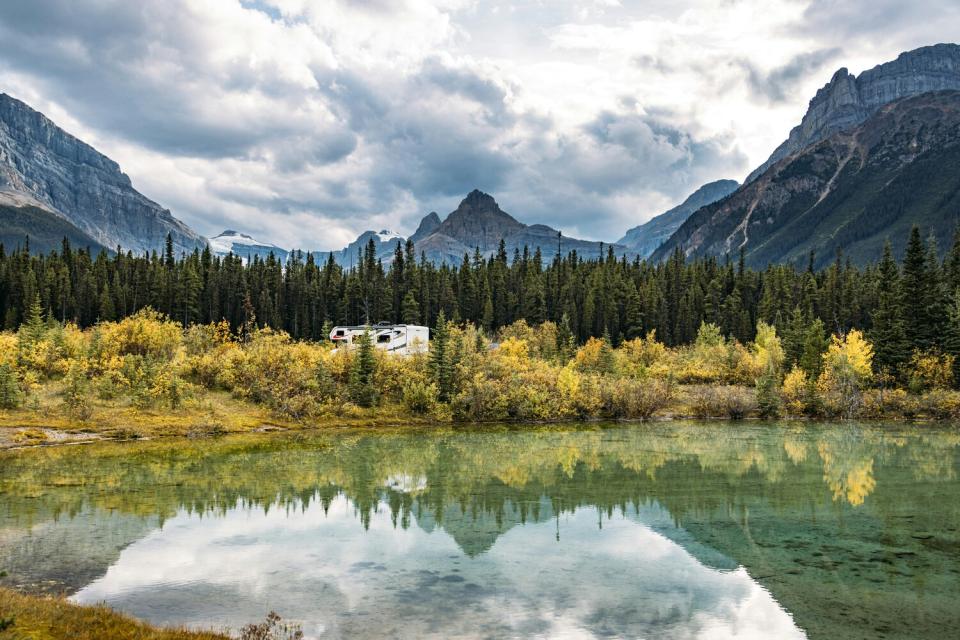
Photo credit: Rafael Peier (Unsplash)