BTM InterAzioni and Via Francigena del Sud. Great numbers for slow, inclusive, and off-season tourism

Redazione BTM
- 28/09/2026
Immersive fam trip, B2B sessions between international demand and local supply, youth training, institutional debate, and one certainty that brings everyone together: The Via Francigena del Sud confirms itself as a cutting-edge laboratory for universal and inclusive hospitality.
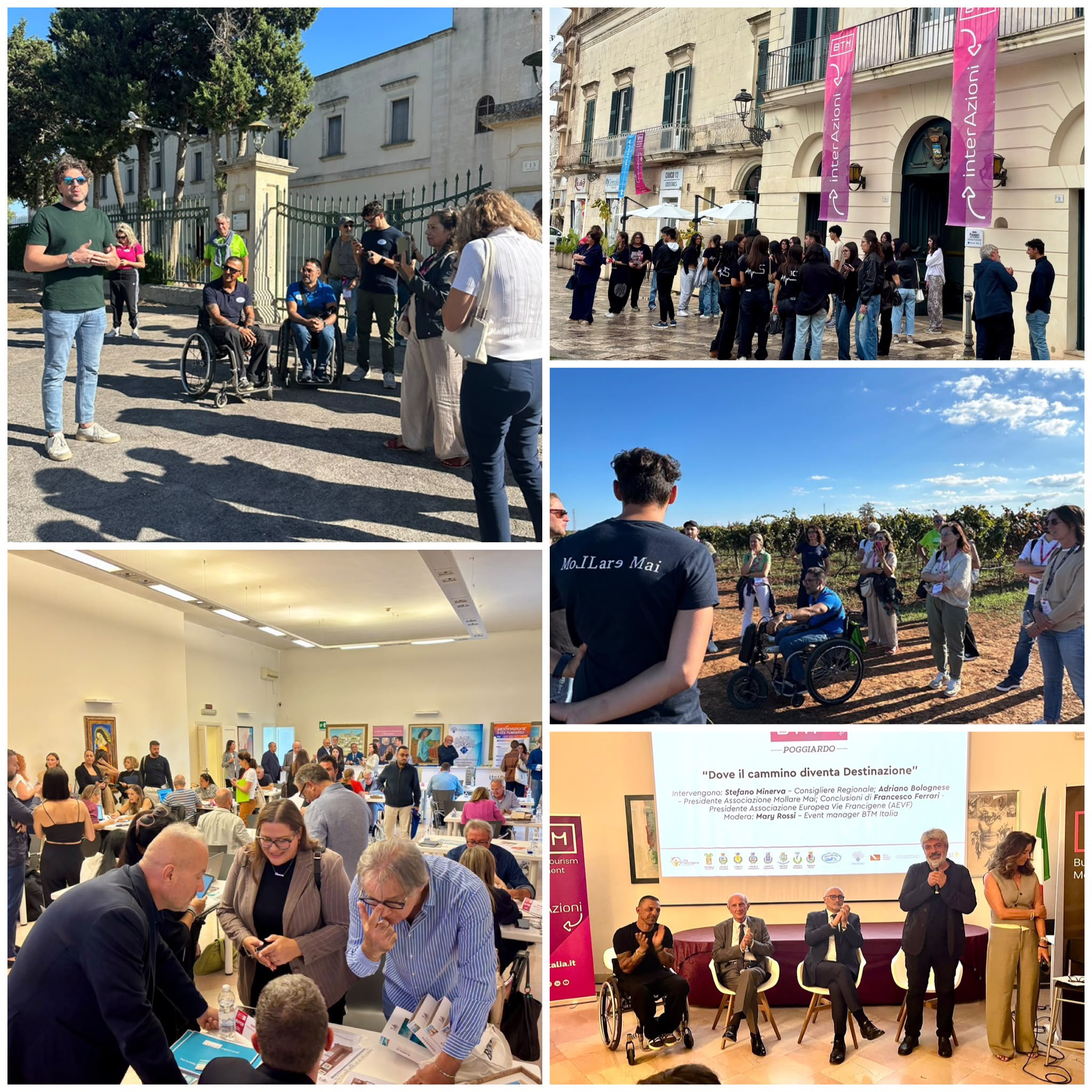
The Salento stage of BTM InterAzioni concluded with a more than positive outcome, the traveling format of BTM Italia that from September 23 to 25 transformed Poggiardo and the network of nearby villages into the center of the debate on the tourism of the future, focusing on accessibility and enhancement of territorial paths. A single thread for a multi-voiced dialogue among institutions, operators, and stakeholders to outline and consolidate an integrated, off-season, and sustainable tourism offer. The event, sponsored by the Province of Lecce, represented the synthesis moment of the project “For an Accessible Via Francigena del Sud for Everyone”, with the Municipality of Poggiardo as the leader of a network composed of Cannole, Giuggianello, Giurdignano, Martano, Palmariggi, and Tricase, in collaboration with the European Association of the Via Francigena (AEVF) and the Association Mollare Mai. The initiative, funded by the Ministry of Tourism, aims to transform about 120 km of the Salento route (divided into 5 stages between Lecce and Santa Maria di Leuca) into a pioneering model in Italy for 360-degree inclusivity, capable of addressing not only motor, sensory, and cognitive disabilities but also needs related to age, nutrition, or temporary mobility limitations. An ambitious project, coordinated by Dario De Vitis, whose implementation is entrusted to the Municipality of Poggiardo.
Fam Trip and Press Tour: discovering the most authentic Salento
In the first two days, 20 international buyers and industry journalists participated in an experiential itinerary to discover the most authentic soul of the territory. Moments made unique by the extraordinary beauty of the places and the warm hospitality of the host communities.
The itinerary began in Tricase. The group, accompanied by environmental development and slow tourism expert Fabio Mitrotti, walked a first stretch along the Via Francigena, from the Crypt of the Madonna dell’Attarico to the scenic Torre del Sasso, and then continued with a visit to Palazzo Gallone and the ancient Prisons. The journey into local culture continued in Poggiardo with a stop at the Museum of Frescoes and an evening dedicated to the specialties of the coast, in Santa Cesarea Terme.
On the second day, the route wound through historic paths, villages, and artisanal traditions. In Martano, the delegation visited the Convent of the Cistercian Fathers and walked along the historic paths of the Francigena, before moving to Cannole to walk through the Masseria Torcito Park, exploring the Torre Colombaia, the underground oil mill, and the ice houses. Then it was the turn of Giuggianello, and the Civic Museum of Peasant Civilization and a site inspection at Tenuta Centoporte (Otranto). In the afternoon, the group visited the Sanctuary of Montevergine in Palmariggi with a walk to the Church of San Luca. Then it was the turn of the Menhir Cellars (whose rows are located right on a stretch of the Via Francigena del Sud) and Giurdignano. Here, history intertwined with innovation thanks to the use of virtual reality (VR) headsets for the visit to the Crypt of San Salvatore, continuing on foot towards the Menhir of San Paolo and the Trappitello del Duca. The last stop of the fam trip was Palazzo Bernardini De Pace in Bagnolo del Salento.
A highlight of each stop was the presence of local administrators who personally welcomed the delegation: from the mayor of Tricase, Antonio D’Amato, to the councilor responsible for the Paths for the Municipality of Martano, Salvatore Chiriatti; from the mayor of Cannole, Leandro Rubichi, to the mayor of Giuggianello, Luca Benegiamo; from the mayor of Palmariggi, Franco Zezza, to the mayor of Giurdignano, Monica Gravante. A cohesive and compact local government team that, alongside the leading Municipality of Poggiardo, demonstrated a shared and solid vision, ready to work together for the growth of Salento.
The field experience served to understand how the upcoming infrastructural and digital interventions will be directed: georeferencing, stops with first aid, smart benches, tactile QR codes, LIS, and augmented/virtual reality. A strategic package, based on the AEVF Handbook.
Business, School, and National Conference
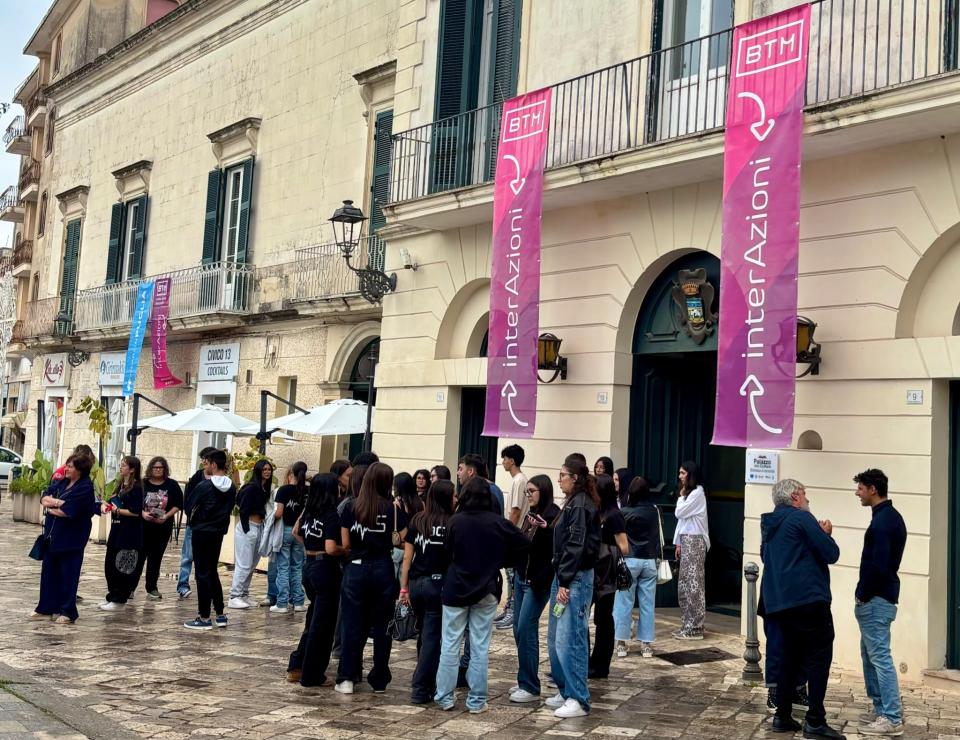
On the concluding day, buyers met local sellers, about 200 operators. After the morning B2B and meetings with high schools (IIS Don Tonini Bello; Nino Della Notte; “Aldo Moro” in Santa Cesarea Terme; Comi and Salvemini) and with ITS Tourism students, ample space was given to the central themes of the initiative in the national conference, coordinated by Mary Rossi, Event Manager BTM Italia, titled "Francigena Salento on the move: tourism, inclusion, and innovation for territorial enhancement".
The Mollare Mai association presented the site viafrancigenasudsalento.it (under implementation): a portal equipped with audio guides, video guides, and guides in Sign Language to showcase the locations and peculiarities of the municipalities involved in the broader project. The site is designed as an aid for everyone, addressing not only people with physical disabilities but also a much broader market.
A central element of the conference was the establishment of the path as a true tourist destination. The Via Francigena del Sud is not just a simple transit itinerary, but a regeneration engine for the territory, capable of intercepting experiential and conscious tourism. Beyond the beach seasonality, the route promotes active travel year-round, enhancing the inland villages of Salento, the food and wine scene, and the cultural heritage with a model of widespread, inclusive, and sustainable hospitality.
Antonio Ciriolo (Mayor of Poggiardo): These have been truly intense days, dedicated to enhancing the territory. The concluding day, with training moments, the B2B meeting that saw the participation of 200 operators, and an important conference, lays solid foundations for a path that, we are sure, will continue successfully. We will continue with determination the work on this project and on new initiatives: already in the coming days, in fact, we will have the opportunity to discuss a parallel activity aimed at strengthening the planning on the Francigena del Sud.
Adriano Bolognese (President of the Mollare Mai Association): Why should a person with a disability give up the experience of walking a path just because the route has barriers? From this question, everything started, from the dream of four young people from Mollare Mai who, with the strength of those who truly believe in a path, imagined a Via Francigena del Sud accessible to everyone. It is a grand project, with a clear and profound goal: to bring people with disabilities to Salento to let them experience the wonder and hospitality of our land. This dream is now becoming a reality.
Francesco Ferrari (President of the European Association of the Via Francigena): Today we are here in Poggiardo to talk about a fundamental project: accessibility and inclusion along the Francigena route. This is a virtuous example that we will carry as a good practice throughout our Path and across Europe, starting from Canterbury. The territories ask us for this, and above all, the Council of Europe asks us: the Via Francigena must be accessible to everyone. It is a project of enormous cultural, historical, but also and above all social value.
Cristian Casili (Vice President of the Puglia Region): This is a truly innovative project that integrates the social dimension into a tourist itinerary that is already highly attractive for our region. Tourism, when it becomes accessible, becomes even more competitive. With the involvement of many virtuous municipalities and looking at great European models like Spain and France, we demonstrate that Salento has the skills to transform great ideas into significant initiatives.
Nevio D’Arpa (CEO & Founder of BTM Italia): BTM InterAzioni tells the authenticity of our villages, transforming the tourism offer into a solid, attractive, and usable proposal all year round. The data from the event speak clearly: more than 200 operators involved in B2B, over a hundred students from five high schools and the ITS participated in the training session on Friday morning, and a conference room that was always full. Promoting the Via Francigena del Sud means affirming Salento as an excellent destination for truly slow, experiential, authentic, and inclusive tourism.