
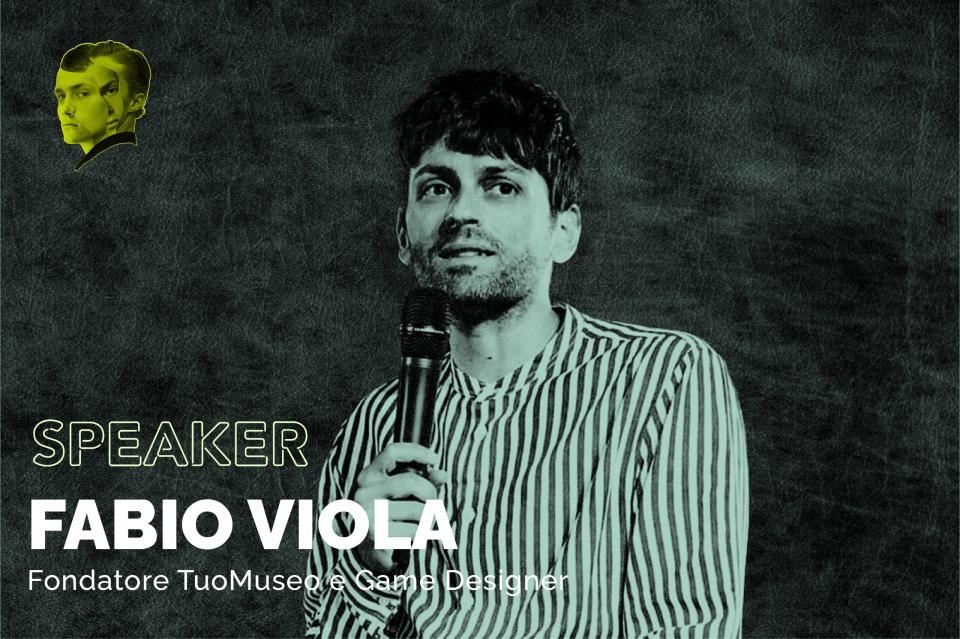
At BTM Italy 2026 Fabio Viola talks about the tourism of 'spettAttori and spettAutori'

Redazione BTM
- 21/01/2026
Gaming, Artificial Intelligence, and new technologies to re-generate imaginaries. BTM 2026 will host one of the most stimulating events dedicated to cultural and tourism innovation. On February 25 at 11:00 AM, in the Think Tank Room, Fabio Viola, game designer, founder of Tuo Museo, author of several essays, and university lecturer, will be the protagonist of a talk that invites a radical rethink of how to design and experience tourism.
In his speech, “New Generations, New Rites: the tourism of spettAttori and spettAutori”, he will explore how tourism is undergoing a profound transformation, driven by new generations and contemporary languages. Today, visitors no longer settle for mere observation: they want to participate, choose, influence, and feel like active parts of a narrative.
Video games, generative Artificial Intelligences, and immersive technologies are introducing new models of cultural enjoyment, where the tourist becomes the protagonist, just like in a video game: no longer a simple spectator, but a spettAttore and spettAutore of the experience.
Through innovative case studies, the talk will propose a true paradigm shift for the sector, showing how it is possible to regenerate imaginaries, territories, and communities, creating experiences capable of generating identity, belonging, and new forms of emotional engagement.
“One of the main challenges – announces Viola - will be overcoming the idea of visitor/spectator to whom we simply offer experiences, to instead approach the real needs of new generations: to be spettAttori and spettAutori. In the languages they frequent, in the technological worlds they now inhabit, and in digital squares, the younger ones are already experimenting with the possibility of taking actions that modify the experience itself. This allows them to feel like protagonists, as happens in video games or in digital social dynamics. Being spettAutori means constantly creating one's own content, not limiting oneself to enjoyment but also becoming producers, going beyond the traditional concept of experience. Another trend that will need to be abandoned – he continues - is that of experiences, however curated and fascinating, being the same for everyone. The world of generative Artificial Intelligence is showing us how strong the need is to live something perceived as completely personal, like a tailor-made suit. Thus, we move from standardization to personalization of experiences: what once seemed like a utopia is now possible thanks to digital tools based on AI, capable of creating real-time experiences, quickly and completely adaptable to the audience. The third instance concerns overcoming the dichotomy between online and on-site. Today – concludes the game designer - tourism is still heavily focused on what is offered to the visitor once they reach the destination. However, digital worlds teach us that what happens before and after the trip is equally relevant. It is possible to build tourism supply chains already in the pre-visit phase and, above all, after returning home, creating a continuous axis between before, during, and after. This opens the door to new supply chains, new modes of engagement, and completely new hybrid experiences, all to be imagined, designed, narrated, and conveyed”.
An unmissable appointment for tourism operators, cultural designers, destination managers, and creatives interested in understanding how gaming, AI, and new technologies can become strategic tools for the future of the travel world.