
Curon Venosta, the village where memory emerges from the lake

Redazione BTM
- 01/10/2025
There is a place in South Tyrol where time seems to have stopped and memory survives among the waters: it is Curon Venosta, the village that no longer exists, swallowed by Lake Resia in the 1950s to make way for a dam.
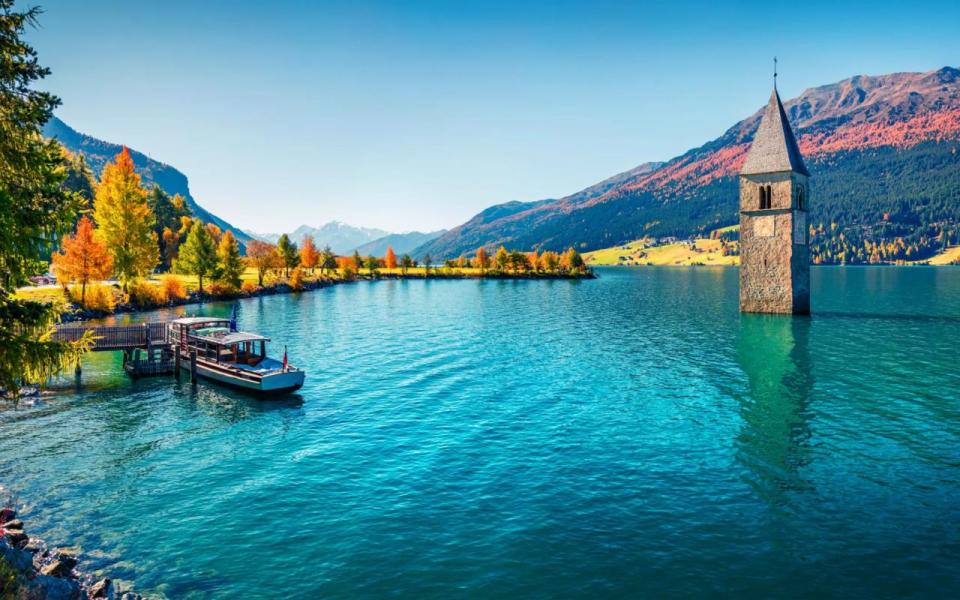
Of its houses, alleys, and cultivated fields, nothing remains, except for a solitary bell tower that rises from the water like a silent guardian of the past. Seeing it is an experience that shakes: it is an almost unreal, magnetic image.
The inhabitants of that time lost everything, they were forced to leave their homes and rebuild them higher up, while the old village disappeared beneath the surface of the lake. Yet the bell tower has endured, and with it the stories, legends, and whispers of those who remember: it is said that, on winter nights, when the lake turns into a sheet of ice and silence falls everywhere, one can still hear the bells ringing, an impossible yet vivid echo in the imagination of those who listen.
Visiting Curon today means much more than taking a photo: it means walking along the shores of the lake and feeling that nature and memory intertwine. It means letting oneself be carried away by the wind that moves the sails and watching the kites of the more adventurous, or discovering paths that lead to refuges nestled in the Ortles mountains. It also means sitting in an inn and savoring the simple and authentic taste of Tyrolean cuisine, fragrant with wood, speck, and strudel. Curon is a place that captivates with its authentic simplicity, it enters inside and, in some way, forces one to reflect on the bond between man and nature, on the power of time and the strength of memory: a journey here is not just tourism, it is a meeting with history, with the resilience of those who have lost everything and have managed to start over, and it is a way to experience the magic of a landscape that remains etched in the eyes and heart.
Bordering both Switzerland and Austria, Curon Venosta represents the last stretch of the Val Venosta, where the Adige River, just a few meters from its source, fills the crystal-clear waters of Lake Resia, an artificial basin that today is a paradise for water sports, immersed in a high mountain landscape. In recent years it has become an increasingly popular destination, not only for its iconic bell tower but also thanks to the international notoriety gained by the Netflix series “Curon,” which has sparked the curiosity of Italian and foreign tourists. Before this phenomenon, the village was mainly frequented by trekking, cycling, and photography enthusiasts; today, however, it welcomes visitors attracted by the mix of nature, history, and mystery.
With about 2,450 inhabitants, even a relatively small number of tourists can have a significant impact: during the summer season and winter weekends, the lake and surrounding areas can become crowded, especially on sunny days or when the lake is frozen and accessible. This influx of visitors has brought concrete economic benefits: bars, restaurants, bike rentals, guided tours, and accommodation facilities report a significant increase in revenue. On the other hand, the growth of tourism poses sustainability challenges: the risk of overcrowding on walking paths, environmental impact on the shores and natural trails, and the need to manage parking and public services. For this reason, many local initiatives aim to promote responsible tourism, inviting visitors to respect the environment, not to leave waste, and to favor walks and low-impact activities.
Curon Venosta is an example of how a small village can become internationally famous while still facing the challenge of balancing tourist visibility and land protection. Visiting the village does not mean just stopping in front of a living postcard: it means experiencing an experience that connects nature, history, and memory, if approached with respect.
The bell tower of the church, which managed to surpass the depth of the basin, is in every respect the historical symbol of Curon. Seeing it rise from the waters of the lake instills almost fear or at least conveys a strong suggestion. Perhaps because it is the only survivor of an explosion that demolished about 160 buildings.
Photo: www.italia.it